At its peak, nearly one million kilograms of meat were supplied for sale from Vähäkyrö during a single winter?
Discover the Toola Museum of Slaughtering and Sausage Making in the Kirkonmäki Cultural Area of Vähäkyrö and immerse yourself in one of the most significant chapters of the area's economic history. This experiential museum tells the story of a profession that played a decisive role in the prosperity, employment and reputation of Vähäkyrö during the nineteenth and twentieth centuries.
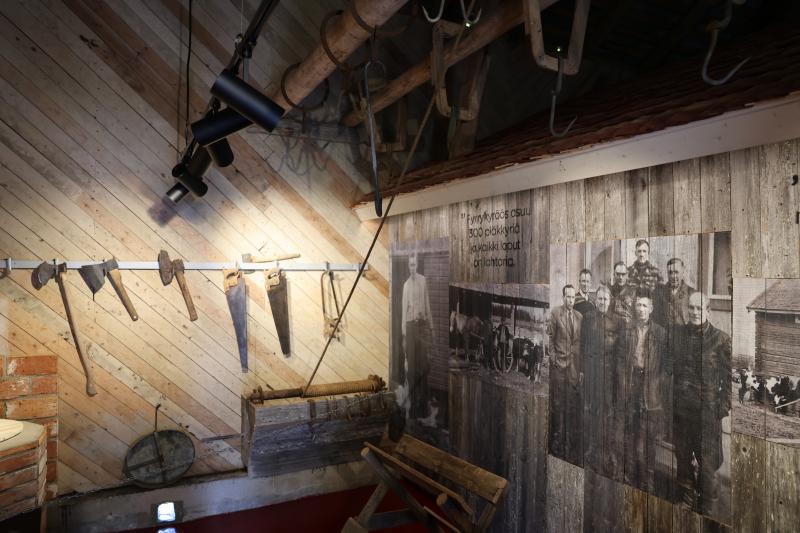
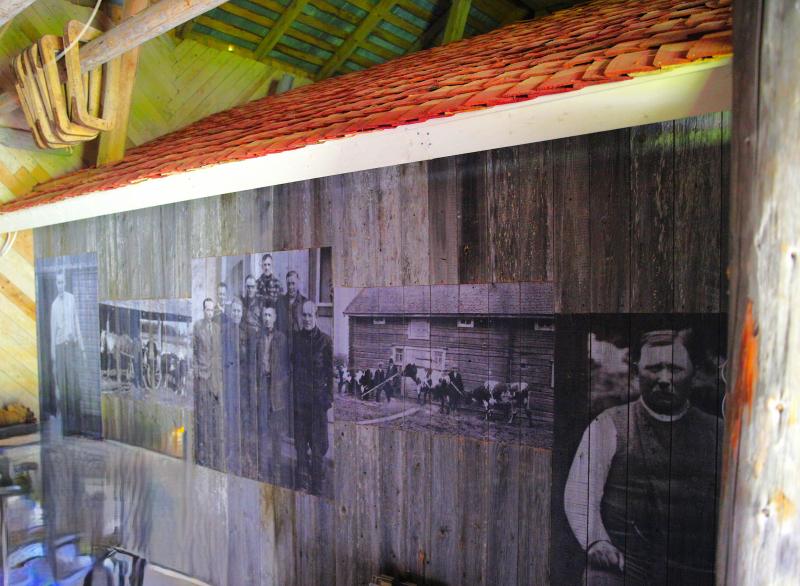
In Vähäkyrö, as elsewhere in rural Finland, the slaughtering of livestock for household needs was long a part of everyday life. However, the growing demand for meat in the late nineteenth century gave rise to an exceptionally strong livestock trading and slaughtering industry. A large number of livestock buyers, traders and slaughterers operated in the area. Locally, they were known as lahtarit. The profession included both men and women, and at its height the trade provided employment for more than one hundred people from Vähäkyrö.
In addition to serving the domestic market, meat from Vähäkyrö was exported to Sweden, Estonia and Russia, reaching as far as St Petersburg. During the industry's most prosperous years, nearly one million kilograms of meat were supplied for sale during a single winter season. Livestock trading and slaughtering formed a significant part of the local economy, and their impact could be seen throughout the development of the entire parish.
The beginning of the twentieth century marked a new phase when several sausage factories, known locally as sausage workshops, were established in Vähäkyrö. The first was founded by the well-known slaughterer Tuomas Lahti. Between 1904 and 1948, several sausage factories operated in the area, processing local raw materials and providing employment for hundreds of people. Workers also arrived from other parts of Ostrobothnia and South Ostrobothnia.
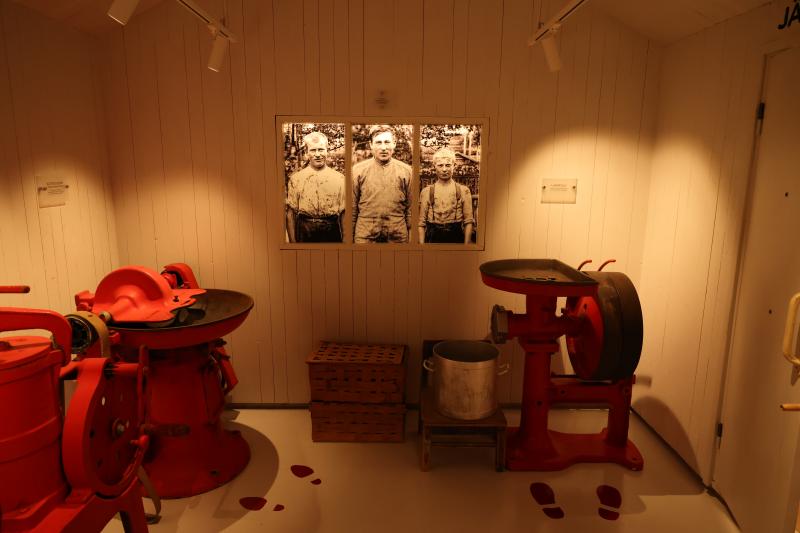
At the museum, visitors can explore an authentic slaughterhouse workspace complete with its original tools and equipment, as well as a traditional sausage workshop with its machinery and production facilities. Exhibits include meat grinders, sausage fillers, a refrigerated storage room, a sales shop and ovens used for smoking and cooking sausages. The collection and reconstructed interiors illustrate the different stages of meat processing as well as the importance of the industry to the local community.
The exhibition also offers experiences for younger visitors. Sounds from farm animals can be heard from the pasture area, while moving animal figures in the roof structures add an element of surprise and atmosphere to the exhibition.
The museum's overall design, together with the exhibition's media artwork installation, was created by Partanen & Lamusuo Oy, an architecture, art and design studio.
The slaughterhouse structures and furnishings were donated by Seija Taivainen, Pentti Haanpää and Esko Haanpää. The machinery of the sausage workshop was donated by Kyrön Makkara and Jorma Haapanen. The meat grinder and one of the sausage fillers on display originally belonged to the T. Lahti sausage factory.
Guided tours for groups can be arranged separately and provide an opportunity to explore the unique history of Vähäkyrö's meat trade in greater depth and to discover the stories behind the exhibition together with a guide.
The Toola Museum of Slaughtering and Sausage Making was built by Vähäkyrö-Seura with support from the Centre for Economic Development, Transport and the Environment (ELY Centre).